
This has been a full few months at NIT, and we’re glad to share some of the highlights with you. Since our last newsletter, we’ve hosted several lectures on history and archaeology. In May, we also celebrated the launch of our latest publication, Archaeological Heritage and Liveable Cities, in Ankara. Looking ahead, we’re excited to open applications for a new masterclass, and we have updates from our fellows and a couple of field projects getting underway this summer and autumn.
Upcoming Events
3 July 2026: Exploring Water Heritage: Diverse Contexts | Perspectives | Practices Symposium at METU
5 July – 15 September 2026: Tell Kurdu Excavation 2026 field season
22-24 September 2026: Leiden University Critical Heritage Studies of the Ancient Near East Course Visit at NIT
19-21 October 2026: NIT Urban Heritage Lab Water and Heritage Workshop
22 October 2026: Who Cares? Rethinking Heritage Protection Through Care Symposium (co-organized with BIAA and DAI Istanbul)
25-27 October 2026: NIT Masterclass Connecting Constantinople: The City and the World in Objects (see below for details)
4 December 2026: NIT Day in Groningen
Exploring Water Heritage: Diverse Contexts | Perspectives | Practices Symposium
Exhibition Opening 3 July 2026, Friday 14.00
Lecture Series 3 July 2026, Friday 14.00–17.00
METU Archaeological Museum / ODTÜ Arkeoloji Müzesi
NIT Masterclass: Connecting Constantinople: The City and the World in Objects
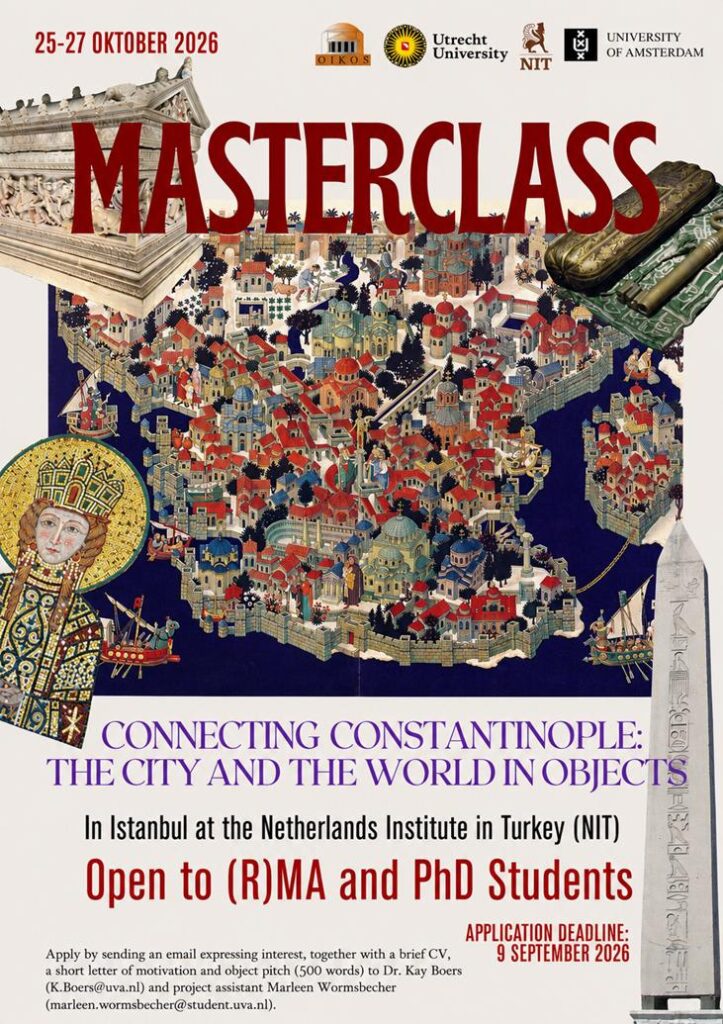
The Connecting Constantinople: The City and the World in Objects is a NIT masterclass organized by Kay Boers (UvA), Rolf Strootman (UU), Fokke Gerritsen (NIT), and Marleen Wormsbecher (UvA) that explores how objects shaped links between Istanbul and other cities through the lens of object mobility. The program will be held in Istanbul on 25–27 October 2026, with an introductory meeting on 9 October by Zoom. Applications are open until 9 September 2026. The masterclass aims to help (r)MA and PhD students study the city through its objects, examining how items were moved, collected, displayed, and re-contextualized in imperial, religious, and archaeological settings, while developing object-based methods for urban history. Please read the course announcement to get further information about the aims, preliminary program, costs and application process on NIT’s website.
NIT Fellowships

In our previous newsletter, we had already introduced all of the 2026 spring semester fellows, including those who were still planning to come.
Ecem Coşan, the last fellow of the spring semester was at NIT from late April until late May to conduct archival and library research on silk production for her research project “Building a Silk Archive: Tracing Labor, Space, and Non-Human Actors Across the Mediterranean Silk Networks (17th–19th Century).” She asks, “Who gets to be preserved within silk heritage narratives, and who remains invisible?” She wrote about her preliminary findings for the NIT blog.
Another contribution to the NIT blog came from one of our former fellows, Nuri Kurnaz (University of Amsterdam). His blog post argues that Sukarno’s 1959 visit to Türkiye offers a revealing lens on the country’s Cold War-era diplomacy, identity, and place between East and West. You can read Nuri’s blog post here.
Recent Activities
Archaeological Heritage and Liveable Cities Book Launch Ankara


On 22 May, we organized the book launch of Archaeological Heritage and Liveable Cities: Revalorizing the Archaeology of Roman Ankara, at TAÇDAM Archaeology Museum at METU as part of the International Museum Week. The mini symposium opened with Musa Kadıoğlu’s lecture on Roman Ankara, followed by talks Güliz Bilgin Altınöz and Pınar Aykaç on Ankara’s multilayered heritage and museums. The book was presented by Fokke Gerritsen, Aysel Arslan, Gülşah Günata, and Özgün Özçakır, and the session was moderated by Sander van Alphen. The book was presented to Nathalie Lintvelt from the Dutch Embassy in Ankara. The day closed with a flute recital, and a cocktail reception.
The Great Games of Pandemics. Sanitary Internationalism in the Middle East and North Africa, 1792-1942 Lecture
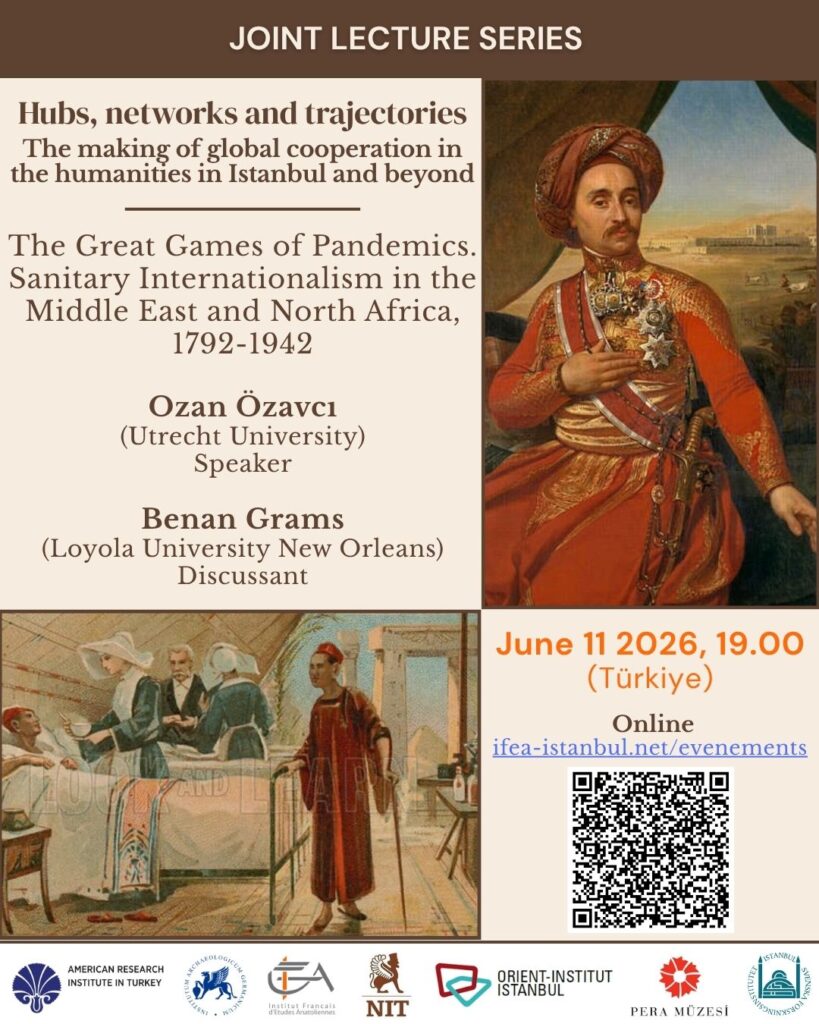
On 11 June, Ozan Özavcı (Utrecht University) presented “The Great Games of Pandemics: Sanitary Internationalism in the Middle East and North Africa, 1792–1942” online, with discussant Benan Grams (Loyola University New Orleans). Drawing on his ERC COOPERATION project, Özavcı explored how international sanitary councils in Tangier, Tunis, Alexandria, and Constantinople/Istanbul formed early, durable global north-south public health networks, arguing that not just Great Power imposition but reciprocal interest drove this transimperial cooperation, despite enduring Orientalist, economic, and nationalist obstacles.
Neighbours in exchange. Bridging cultures, shaping identities: Ionians, Aiolians, Lydians and Carians, ca. 800-400 BCE Lecture
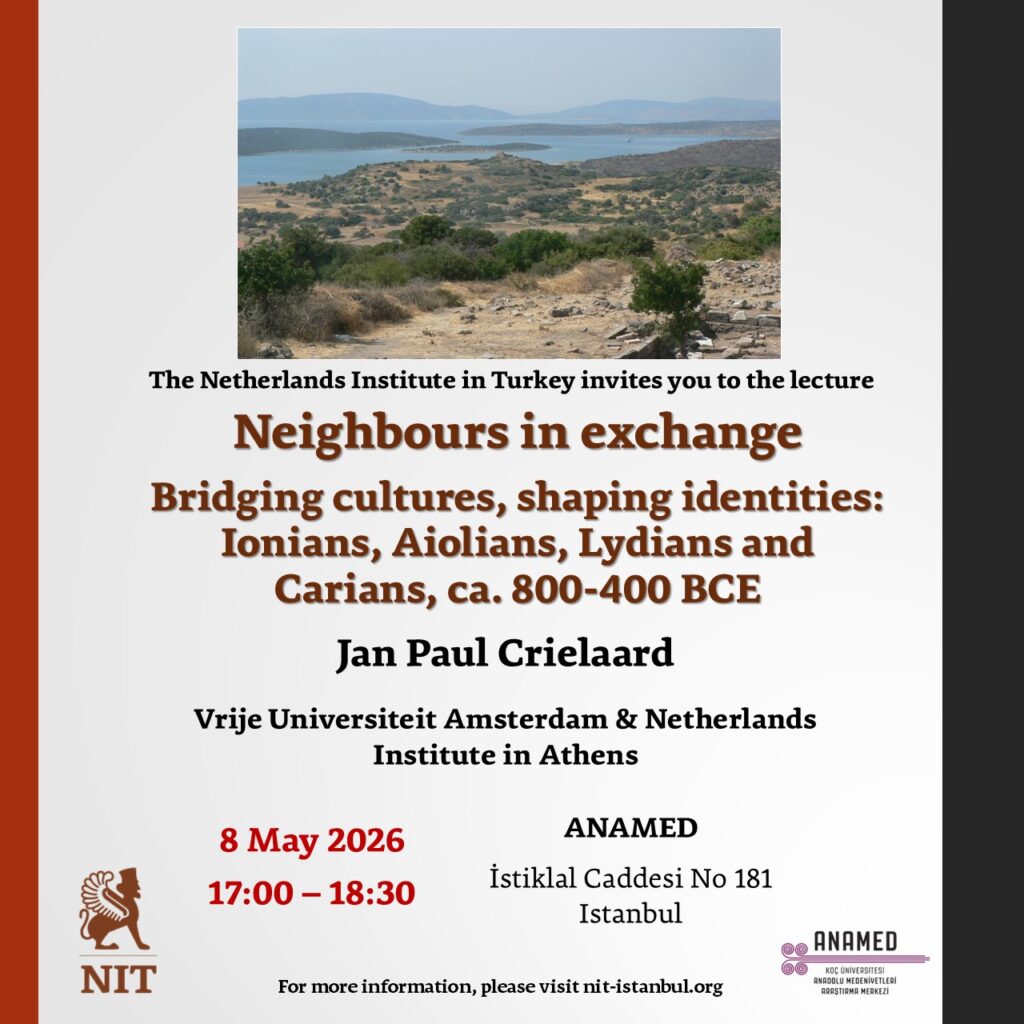
Jan Paul Crielaard (Vrije Universiteit Amsterdam & Netherlands Institute in Athens) gave a lecture, “Neighbours in Exchange,” exploring cultural interactions between Ionians, Aiolians, Lydians, and Carians from ca. 800-400 BCE on 8 May. He examined exchange across language, religion, dress, food, and intermarriage, and the fluid identities these encounters shaped.
Resurrecting the Past: Archaeology and the Coloniality of Knowledge in the French Mandate for Syria and Lebanon Lecture
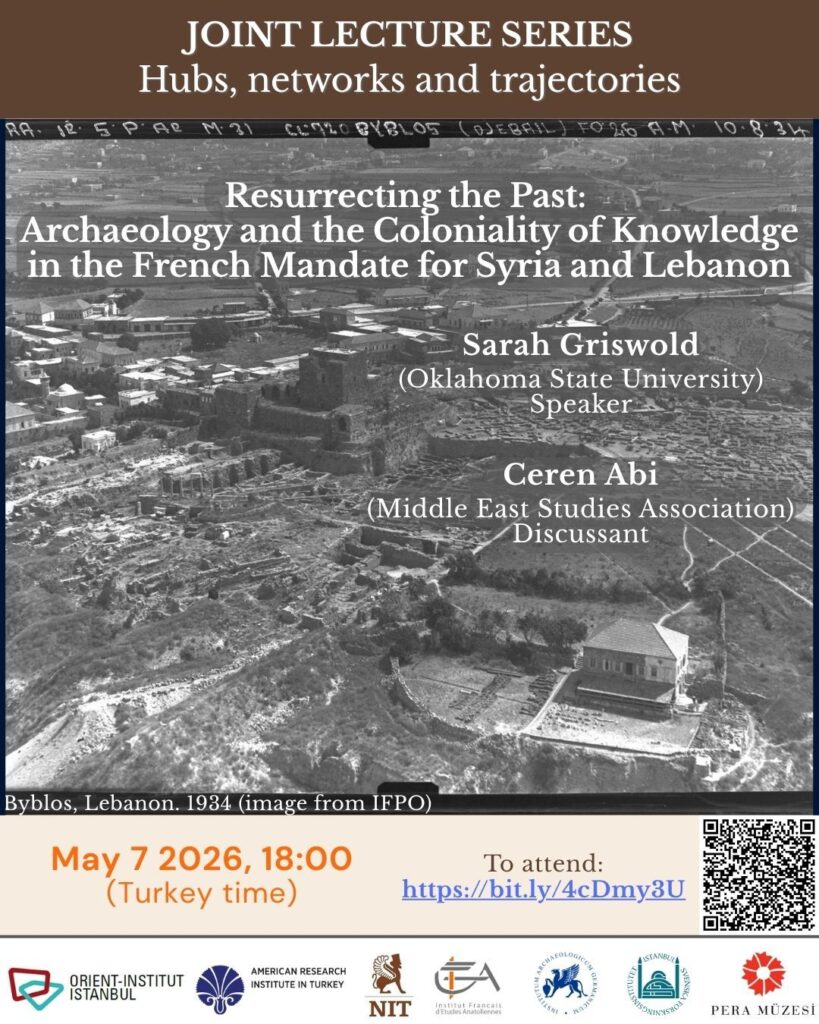
On 7 May, Sarah Griswold (Oklahoma State University) delivered an online lecture, “Resurrecting the Past: Archaeology and the Coloniality of Knowledge in the French Mandate for Syria and Lebanon,” with discussant Ceren Abi (MESA). The talk examined how archaeology, preservation, and museums served as tools of political authority under the French mandate in Syria and Lebanon.