

by Julia Benedetti
During the month of November, I had the opportunity to spend a month at the NIT as a residential fellow, working on my thesis as part of my Master’s programme in Middle Eastern Studies at the University of Groningen. During this period, I stayed together with the other fellow in a comfortable and cozy apartment in a lively neighbourhood, within walking distance of the institute.
I spent a lot of my time in the NIT library, where I worked on the research for my thesis. My research focuses on the presentation of Jewish cultural heritage in Izmir as part of the Izmir Jewish Heritage Project. This project aims, among other things, to restore nine historic synagogues located in Izmir’s Kemeraltı district.
In the past, Izmir was home to a vibrant Jewish community that played an important role in the city’s economic, social, and cultural life. Over the course of the twentieth century, this community gradually declined, and today only a very small Jewish community remains. The physical traces of this history can still be seen in the many synagogues located in the former Jewish quarter. The situation in Izmir is unique: a cluster of several historic synagogues is located on the same street, a phenomenon that scholars argue exists nowhere else in the world. For a long time, most of these synagogues were in poor condition, but the majority have now been restored.
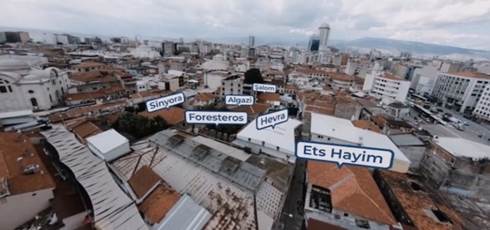
In my thesis, I analyse how these synagogues are presented as heritage, how the interests of the various actors involved in the project become visible in this presentation, and to what extent this heritage narrative fits within broader developments and trends related to minority heritage in Turkey. During my fellowship, I researched the history of the Jewish community in Izmir, the development of various heritage projects since the late 1990s, and conducted an actor analysis of those involved in the Izmir Jewish Heritage Project. This work provided valuable insights and allowed me to write a substantial part of my thesis.
During my fellowship, I also travelled to Izmir, where I visited several synagogues that are part of the project. In addition, I met with the project coordinator of the Izmir Jewish Heritage Project, which provided valuable insights into the project’s objectives and the choices made in the restoration and presentation of Jewish heritage.
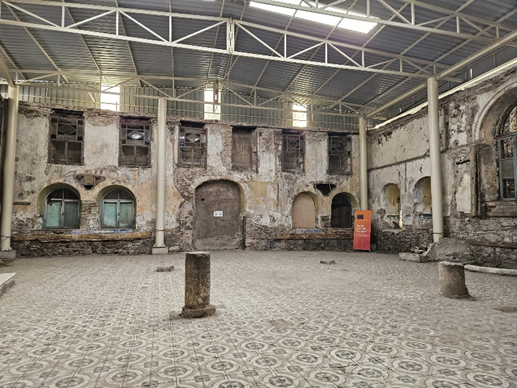
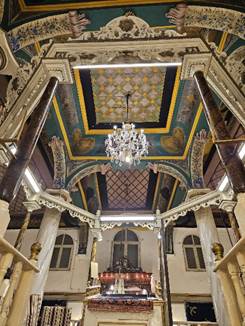
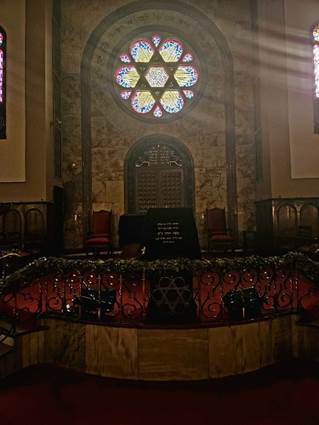
In Istanbul, I also visited the Neve Shalom Synagogue and the Jewish Museum of Turkey, which further deepened my perspective on how Jewish heritage is presented in Turkey and provided an interesting basis for comparison for my thesis.
Besides my research, there was also plenty of time to explore Istanbul’s different neighbourhoods and enjoy the city.
Looking back, I greatly enjoyed my time at the NIT and my stay in Istanbul. I experienced my fellowship as both pleasant and valuable. The library, in particular, provided an inspiring and calm working environment, which greatly contributed to the progress of my research and the writing of my thesis. Overall, the fellowship was a very successful experience for me. I am grateful to the NIT for this opportunity and hope to return to the institute again soon.