

by Ediz Hazır
My second fellowship at the Netherlands Institute in Turkey coincided with a pivotal moment in my doctoral research. The support allowed me to build directly on the work I began during my first stay in 2023 and to strengthen the comparative and transnational dimensions of my project, “Religious Diplomacy between Paris, Rome, and Istanbul: The Assumptionist Congregation and its Mission d’Orient (1863–1914).”

The continuity provided by the NIT has been crucial in broadening my focus to include the Oblates of the Assumption, the female branch of the Assumptionists, which played a key role in education, healthcare, and community work across the Ottoman provinces. Their activities highlight an important aspect of Catholic diplomacy and local engagement that has rarely been examined in depth.
Since my first fellowship, the research I conducted in Istanbul with the NIT’s support has already led to three published articles. During this second stay, I completed the final revisions of an article soon to appear in the Journal of Church and State, published by Oxford University Press. I also finalized a book chapter on the Assumptionist Mission in comparative perspective for a forthcoming volume on Latin and Eastern Catholicism in Ottoman Anatolia, which the ISIS Press, Istanbul, will publish. These publications grew directly from the archival foundation laid during both NIT fellowships.
This latest fellowship allowed me to revisit key fonds at the Directorate of State Archives and SALT, reassess how Ottoman authorities viewed Catholic female congregations, and reorganize the extensive material I collected in Rome and Paris earlier this year. I also advanced an article on the Mission d’Orient’s activities in the Balkans, focusing on the collaboration and tensions between the Assumptionists and the Resurrectionists among Bulgarian Catholics.
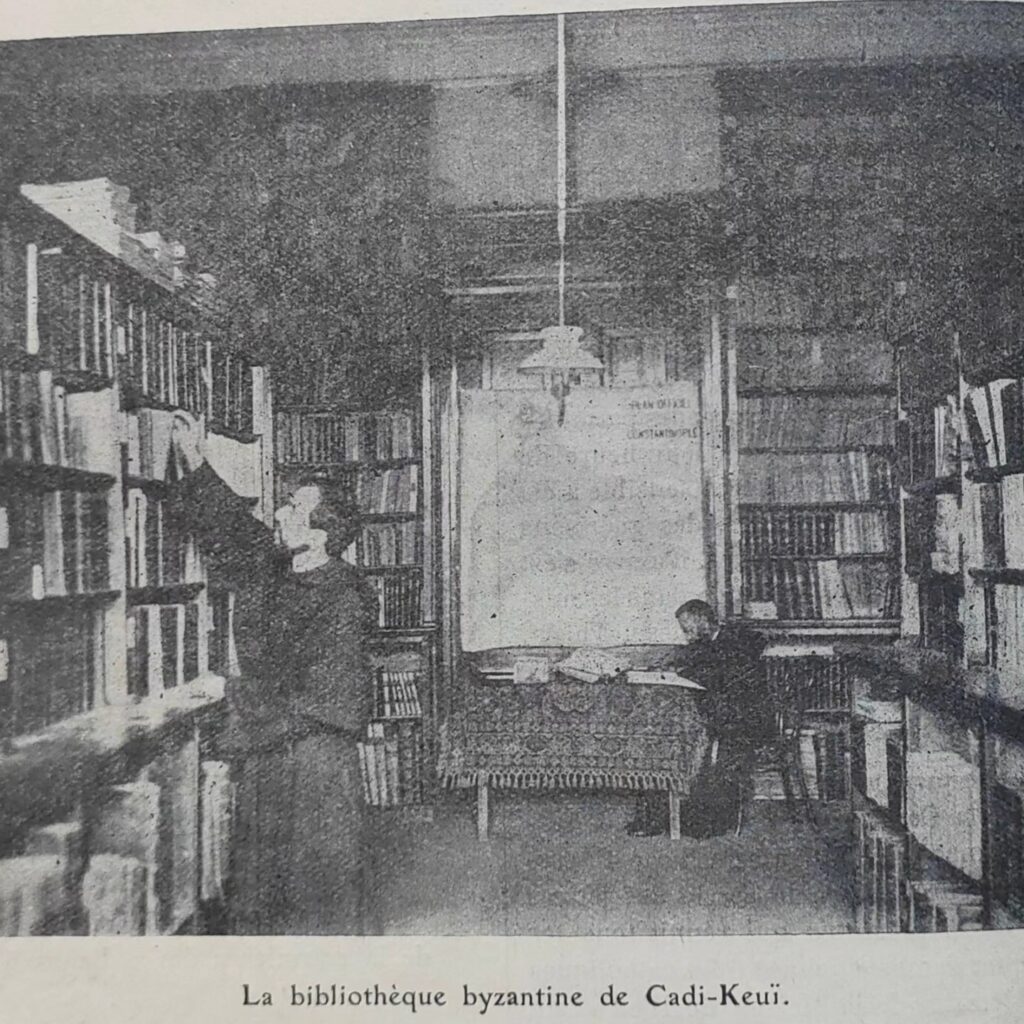
Most importantly, the fellowship enabled me to complete the core research phase of my PhD dissertation. With the Istanbul material now consolidated, I can fully turn to writing the remaining chapters. The stay also provided the time needed to prepare for my next research period in Athens, where further archival work will help contextualize French Catholic activity in regions shaped by the interaction of Latin, Eastern Catholic, and Orthodox influences.
The NIT once again created an environment where demanding research can advance with clarity. I am thankful to Aysel and Fokke for their support throughout my stay. This fellowship has strengthened the foundation of my dissertation and provided the momentum I need as I move into its final stage.